1. Definition and working principle of cast film machine
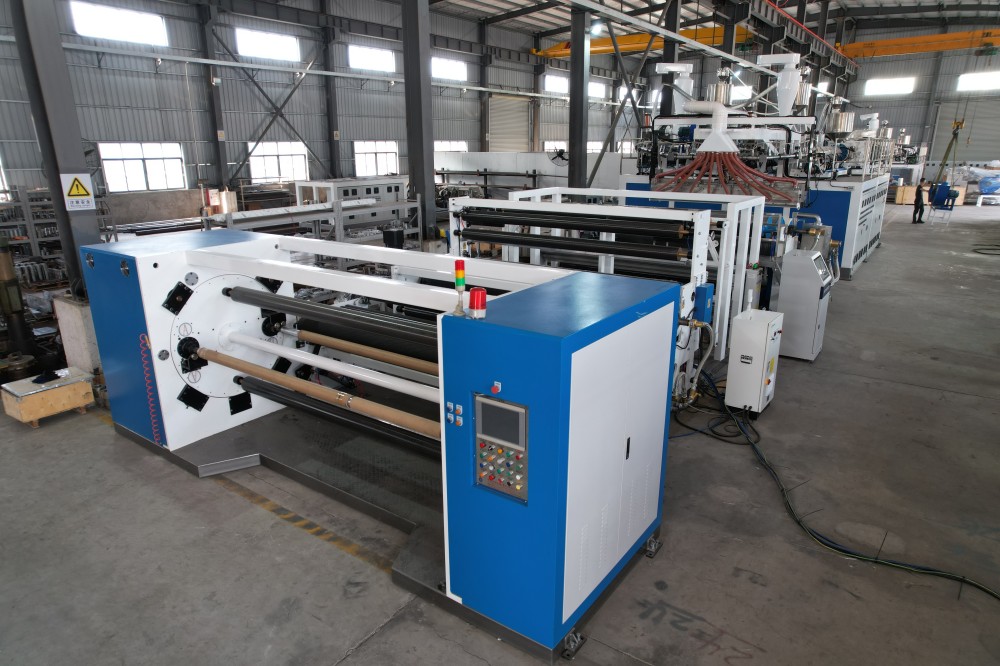
Cast film machine is a special equipment that processes high molecular polymers (such as polypropylene PP, polyethylene PE, etc.) into films through melt extrusion process. Its core process is melt casting method:
Raw material melting: Plastic particles are heated and melted by extruder (temperature is usually 200-280℃).
Cast molding: The melt is evenly extruded through the T-die head and quenched on the surface of the cooling roller (the temperature of the cooling roller can be as low as 0-10℃).
Tractive winding: The film is flattened by the traction roller and then rolled to form a finished product.
Compared with the traditional blown film process, the film produced by the cast film machine has the advantages of high thickness uniformity (error within ±2%), good transparency (light transmittance ≥92%), and high production efficiency (line speed can reach 300m/min).
2. Core features and data advantages
Efficient production capacity
Line speed: High-end models can reach 300m/min, and the daily output exceeds 50 tons (taking CPP film as an example, when the thickness is 25μm).
Multi-layer co-extrusion technology: supports 3-7 layer composite structure, and the interlayer thickness control accuracy is ±1.5%.
Excellent film performance
Thickness range: 10-200μm, meeting different packaging needs.
Physical properties:
Tensile strength (longitudinal/transverse): ≥40MPa/≥25MPa
Elongation at break: ≥400%
Heat sealing strength: ≥8N/15mm
Energy-saving and environmentally friendly design
Energy consumption: Unit energy consumption is 15%-20% lower than that of traditional equipment (such as using servo motor drive system).
Waste heat recovery: Cooling water circulation system can reduce water resource consumption by more than 60%.
3. Application fields and typical cases
Packaging industry
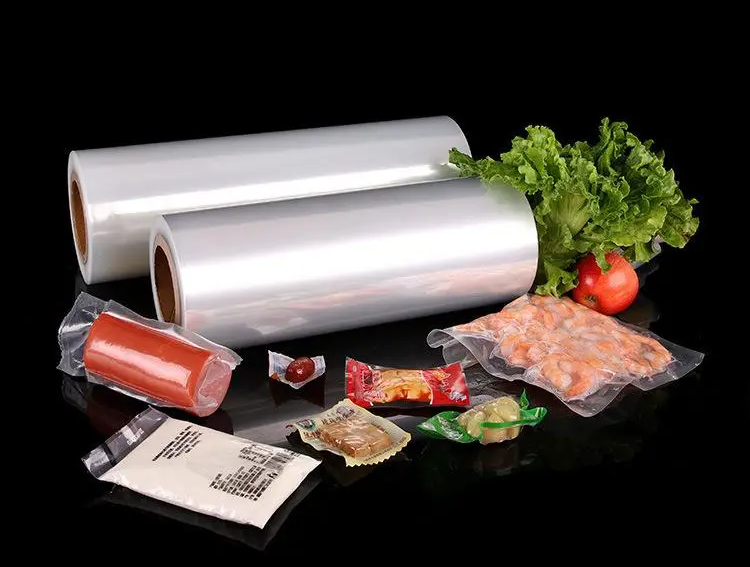
Food packaging: CPP film is used for cooking bags (resistant to high temperature of 121℃), self-supporting bags, etc.
Medical packaging: High barrier PVDC coated film to extend the shelf life of drugs.
Daily chemical packaging: PET/PE composite film, used for soft packaging such as shampoo and cosmetics.
Industrial field
Electronic materials: optical grade PET film (thickness 12-50μm), used for LCD backlight module.
New energy: solar cell backplane film (fluorine coating), weather resistance ≥ 25 years.
Agriculture and construction
Agricultural film: EVA anti-fogging film, light transmittance increased by 10%, service life extended to 3 years.
Waterproof material: TPO self-adhesive waterproof membrane, tensile strength ≥ 18MPa, puncture resistance ≥ 90N.
4. Maintenance guide
Daily maintenance
Cleaning: Clean the die flow channel and cooling roller surface after daily shutdown to prevent carbide accumulation.
Lubrication: Regularly add high temperature resistant grease (such as Klüberplex BEM 41-132) to the screw and bearing.
Regular maintenance (quarterly)
Precision calibration:
Die gap: Use laser rangefinder to detect, error ≤ 0.01mm.
Cooling roller parallelism: Adjust by micrometer, deviation ≤ 0.02mm/m.
Parts replacement:
Filter: Replace every 500 hours (accuracy 20-40μm).
Sealing ring: Check and replace aging parts every 2000 hours.
Troubleshooting
Uneven film thickness:
Check the tightening torque of the die head bolts (recommended value: 15-20N·m).
Adjust the lip gap (calibrate with a 0.01mm feeler gauge).
Film wrinkles:
Correct the parallelism of the cooling roller and the traction roller (error ≤0.1mm/m).
Check the air knife pressure (recommended value: 0.02-0.05MPa).
5. Industry trends and prospects
As the packaging industry's requirements for film performance increase, cast film machines are developing in the following directions:
Intelligent: Integrate AI visual inspection systems to monitor film defects (such as crystal points and fish eyes) in real time.
Green: Use bio-based materials (such as PLA) casting technology to reduce carbon emissions.
Multifunctional: Develop special film production lines such as release films and protective films to expand application scenarios.
Through continuous technological innovation and refined maintenance, cast film machines will play a greater role in high-end packaging, new energy, electronic information and other fields.